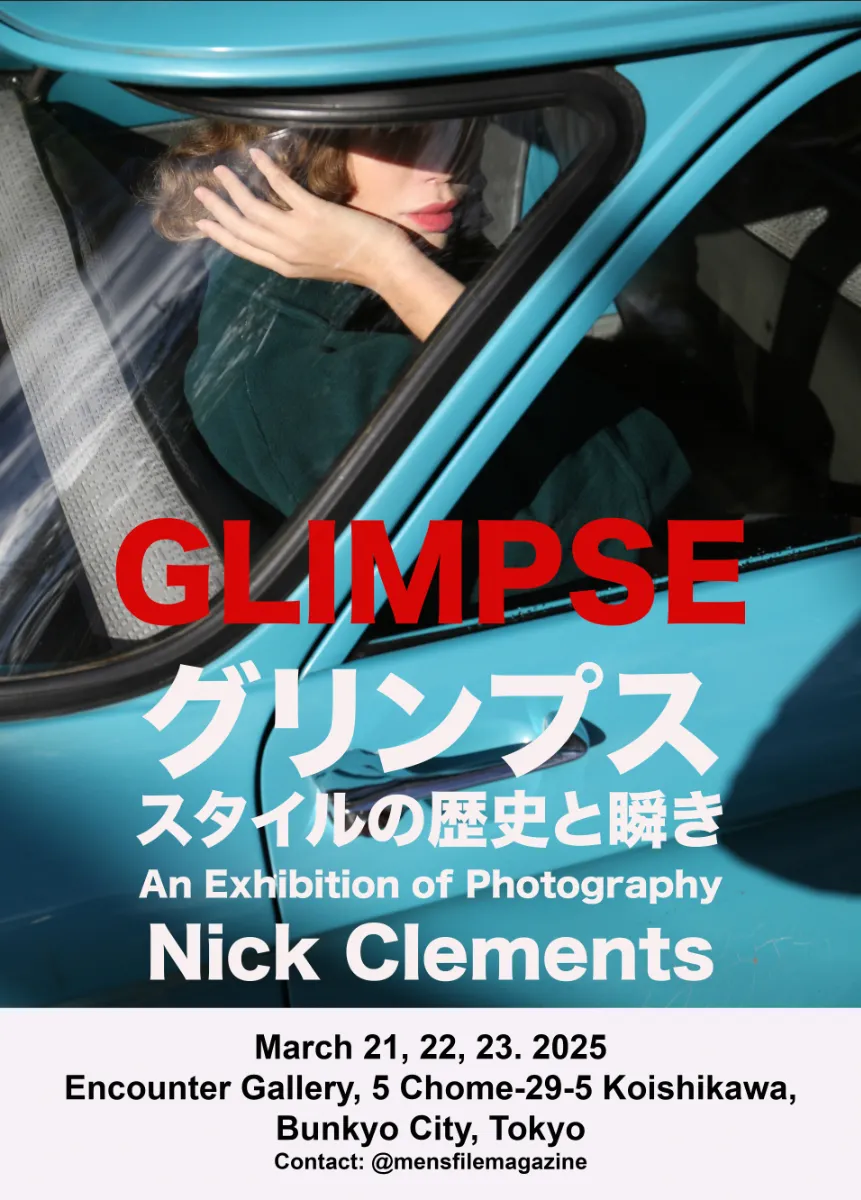
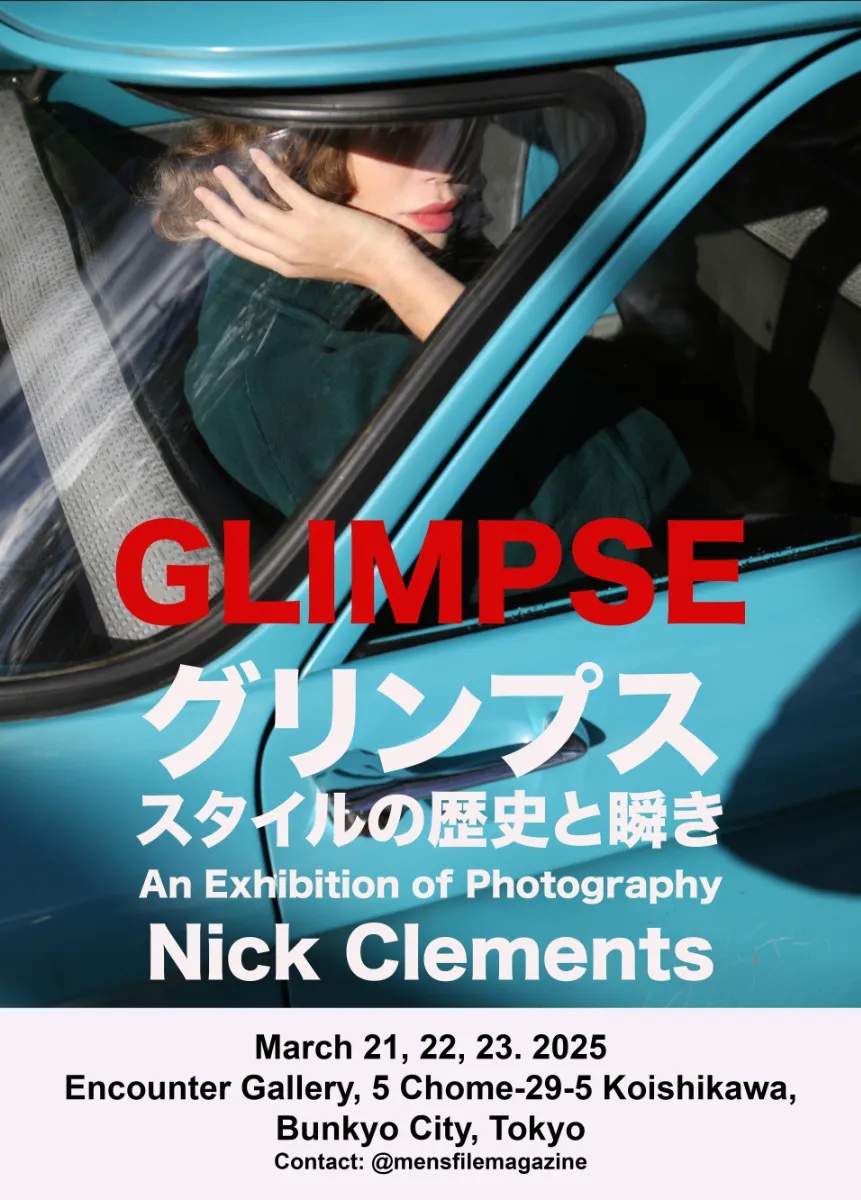
会期:2025.03.21 fri~2025.03.23 sun
時間:11:00~19:00 ※最終日のみ17:00
photographer:NickClements
Defined by its temporality, the ‘glimpse’ is a momentary act of recognition and revelation, stimulated by visual cues. The key term is ‘recognition’, as it is proposed in my theory of the glimpse that the moment of vision is part of a process of ‘image-matching’ in which idealised images (often in the form of a mental montage), held in an archive of mind-photographs, are matched in an almost random way, similar to that of a slot-machine on the floor of a Las Vegas casino. An event is triggered when a group of symbols are aligned and a reward paid-out. Accordingly, the glimpse is not only mooted here as a creative jackpot but also a vital moment of gathering image-capital for those individuals attuned to the rhythms and undercurrents of style (be they stylist, photographer or filmmaker). In which ever mode the mechanics of the glimpse functions, and whether it comes in the two phases suggested here of: (i). recognition followed by input (memory storage) and (ii). recognition followed by output (a creative act), the common factor in both phases is one of extreme brevity and lucidity. A similar phenomenon of the input phase of the glimpse has already been extensively explored by Martin Heidegger as a significant element in the nature of human existence (Dasein). Developed from a proposition by Kierkegaard, Heidegger’s ‘Augenblick’ (blink of an eye) was proposed by the German philosopher in the early 1930s as a moment of revelation and understanding when, in the blink of an eye, extreme clarity is experienced. It is suggested here that such an event adds to the mind-archive and is a net input. In a connected field, something similar to the output phase of the glimpse (recognition followed by a creative act) has been addressed By Henri Cartier-Bresson in his essay The Decisive Moment (1953). As the title suggests, the text describes the split-second act of recognition of the optimum image, as seen through a viewfinder, that is immediately followed by pressing the camera shutter. Apart from the input and output phases of the glimpse, there is another use of image-matching that is explored in Malcolm Gladwell’s book of 2005, Blink: The Power of Thinking Without Thinking. In particular, the author addresses the role of the connoisseur, whose gift is to see an image or object and immediately know if the item in question is ‘right’ or not. In this case, the expert is expecting a glimpse-event to happen almost at the moment they set eyes on a contested work to confirm its validity. If this moment of clarity fails to occur, then doubts as to veracity and provenance might be raised.
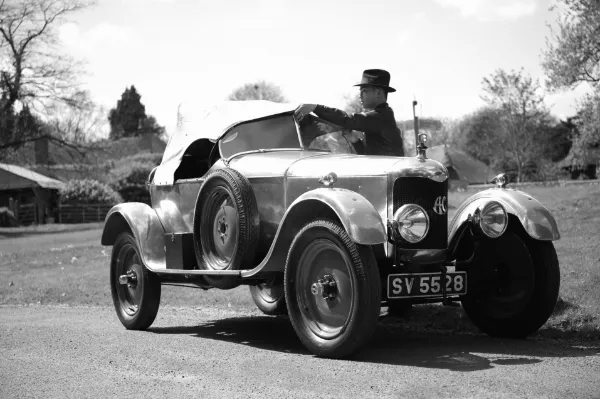
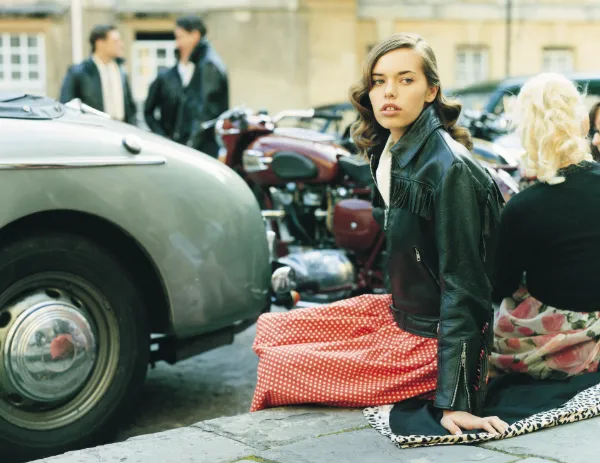
This is a multi-disciplinary, practice-based project, on which I have worked for over 40 years, that presents at the Encounter Gallery, Tokyo a series of photographic images constructed from unreliable and fragmented memories, which are described here as ‘speculative photography’. While being composed in the traditional tableau vivant style, these could be likened to what photography critic Jean-François Chevrier has latterly named the ‘tableau form’, that he defines as a medium to ‘make pictures and interpret experiences’. To be clear, what you see here are not found images from a flea market or obtained through a series of written instructions to a generative AI platform but staged re-enactments, and what Baudrillard and Eco might have compared to examples of the ‘simulacrum’ and the ‘hyperreal’. Furthermore, the tableau form is not new and is exemplified by photographs as early as Oscar Gustav Rejlander’s highly staged, The Two Ways of Life (1857) and latterly works such as Jeff Wall’s A Sudden Gust of Wind (after Hokusai) (1993).
To better understand the glimpse, its liminal aspect must be considered and although it is connected with the process of photography, it cannot be compared to the exactitude of a photograph. Susan Sontag reminds us that a photograph is not only the intersection of a camera and an event but the taking of a picture is an ‘event’ in its own right. The experimental filmmaker Peter Kubelka, who said that the real narrative was created ‘between the frames’, perhaps offers some indication as to the location and availability of a mind-image gathered during an input glimpse-event. It is proposed here that memories gathered during Heidegger’s ‘Augenblick’, when a momentary glance can reveal an all-encompassing truth, exist in an uncertain liminal landscape somewhere in the mind and, like Kubelka’s space between the frames, are seldom solid or available for instant or accurate recall. With an opening photograph in the exhibition catalogue, that features Courtenay Street, just off Kennington Lane, and stands as a tribute to Karel Reisz’s We Are the Lambeth Boys (1959), this illustrates ways in which this mostly pictorial project also addresses men’s style through a speculative and interpretive lens. However, these images represent only a small sample from a vast body of work that I have amassed over four decades, that seeks to extended our comprehension of the glimpse as a physical and theoretical phenomenon.
Taken between 1988 and the present day, the photographs presented at this exhibition have similarities to those of early practitioners in the tableau genre such as Paul Nadar and Alfred Steiglitz. Although, the photographs seen here probably have more in common with the work of Cindy Sherman, Jeff Wall and Gregory Crewdson, in their reference to various genres in style, subcultures and cinema. When discussing the ways in which he finds the locations for his highly stylised images with Alyssa Loh and Alma Vescovi, photographer Gregory Crewdson frames a glimpse moment to perfection when he describes visiting the potential mise en scène many times and then ‘suddenly’ being able to ‘see the image’ he desires to create at the same location that yielded nothing before. This sudden recognition from Crewdson is vital to this research as it suggests that ‘stylists’ (whether styling subcultural fashions or photographs) hold an archive of half-memories and flawed recollections from glimpse events and other sources, that lay dormant until confronted by a trigger image. Like a magazine editor, who looks at a fashion photograph and unconsciously judges it by its relationship to other similar images in the fashion genre, the essence of this research is that the output glimpse – that might be followed by an act of creativity – is triggered by unconscious image-matching. Although Crewdson had visited the site of a proposed photo-shoot many times, that magical image-match only occurred when conditions were optimal and an output glimpse event was triggered and a creative act preempted. This description of the process of creating tableau form photographs and the role of a sudden, unexplained and revelatory moment of clarity of vision during the process tallies with my own experiences – and the result is seen in this show.